
DATE
2024/9/29 – 10/20
LOCATIONS
Italy:
Prato, Firenze, Carrara
FACULTY MEMBERS
Desiree Ibinarriaga (Senior Lecturer, Collaborative Design Department of Design, Monash)
Ilya Fridman (Senior Lecturer, Deputy Head of Department Department of Design, Monash)
Terri Bird (Associate Professor, Department of Fine Art, Monash)
Mei Miyauchi (Project Research Assistant, Global Support Center, TUA)
COOPERATION
Comistra S.r.l.
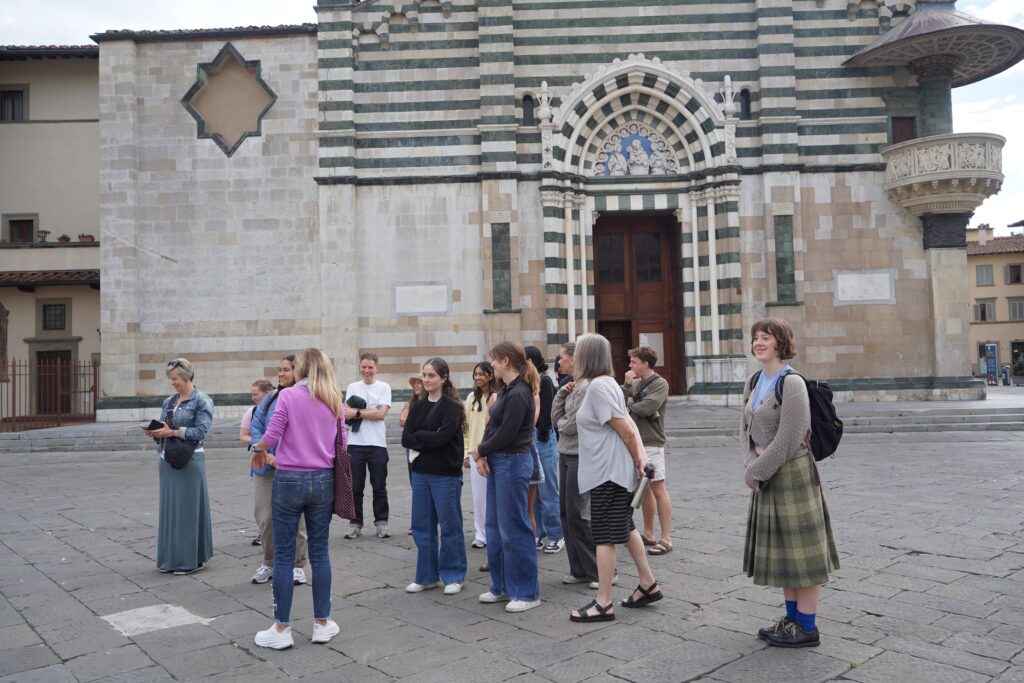
This field-based academic unit was conducted primarily in Prato, Italy, serving as the main site of study and as the base for field trips to Carrara and Florence (Firenze). Through on-site research and interdisciplinary collaboration, the program examined how place, material resources, and cultural knowledge shape the development of local industries and artistic practices. Two major case studies—Textiles (Week 1) and Carrara Marble (Week 2)—were explored under three thematic frameworks:
- Place – understanding how geography and environment influence production and design;
- Resources and Material – examining extraction, recycling, and material management;
- People, Culture, and Knowledge – analysing labour, tradition, and the transmission of skills.
Students gained a critical understanding of how historical craft practices and global industrial systems intersect, while developing their ability to research collaboratively, interpret materials contextually, and respond creatively to contemporary issues of sustainability and extractivism.
By the end of the program, participants demonstrated the ability to articulate material culture across disciplines and present their findings through reflective and creative outputs.
Case Study 1: Textile (Prato)
Prato has been a centre of wool production since the Middle Ages and today hosts around 7,000 companies, producing approximately 3% of Europe’s textiles.
The study focused on the transition from traditional “Arte della Lana” guilds to a globalized textile economy characterized by migrant labour, rapid production cycles, and circular resource systems.
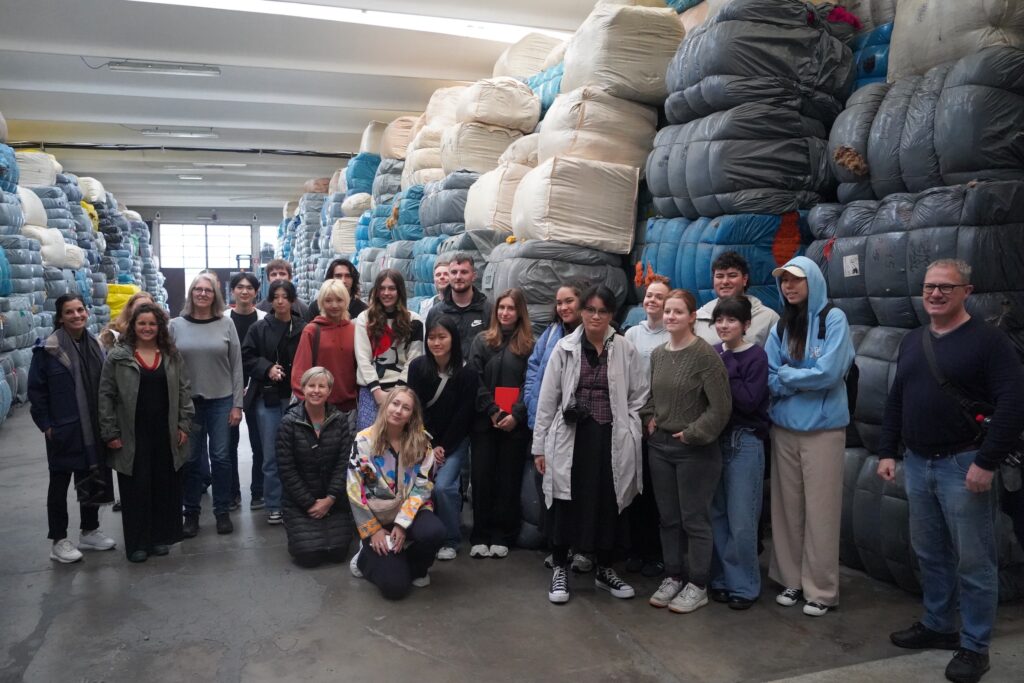
Students investigated the recycling of wool (“regenerated wool”), a practice established in the 19th century that now processes about 15% of the world’s recycled textiles, as well as contemporary social issues concerning workers’ rights and community integration.
Visits to textile mills and design companies such as Gucci, Louis Vuitton, and Patagonia revealed the intersections of heritage, technology, and sustainability.
Case Study 2: Carrara Marble (Carrara & Firenze)
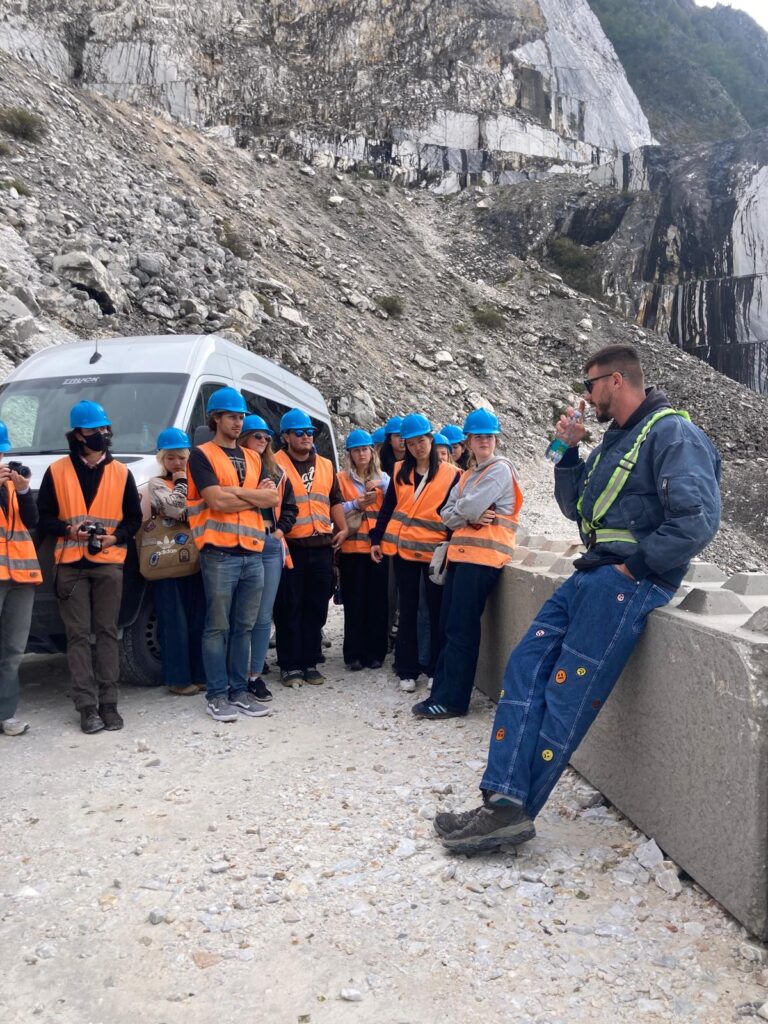
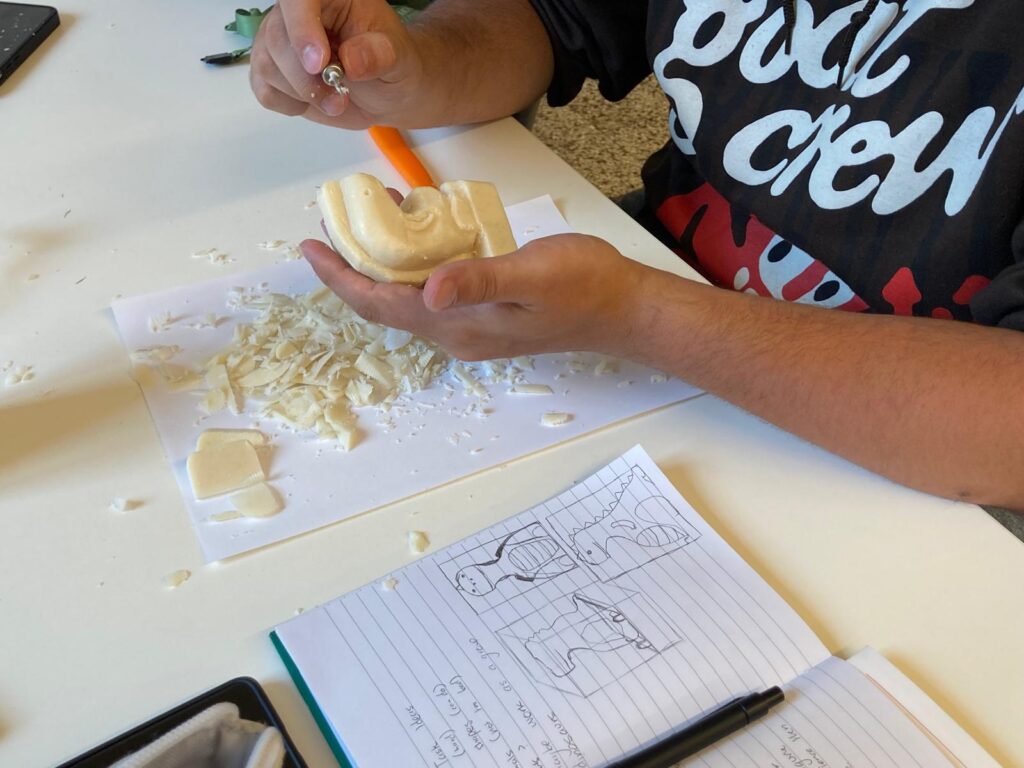
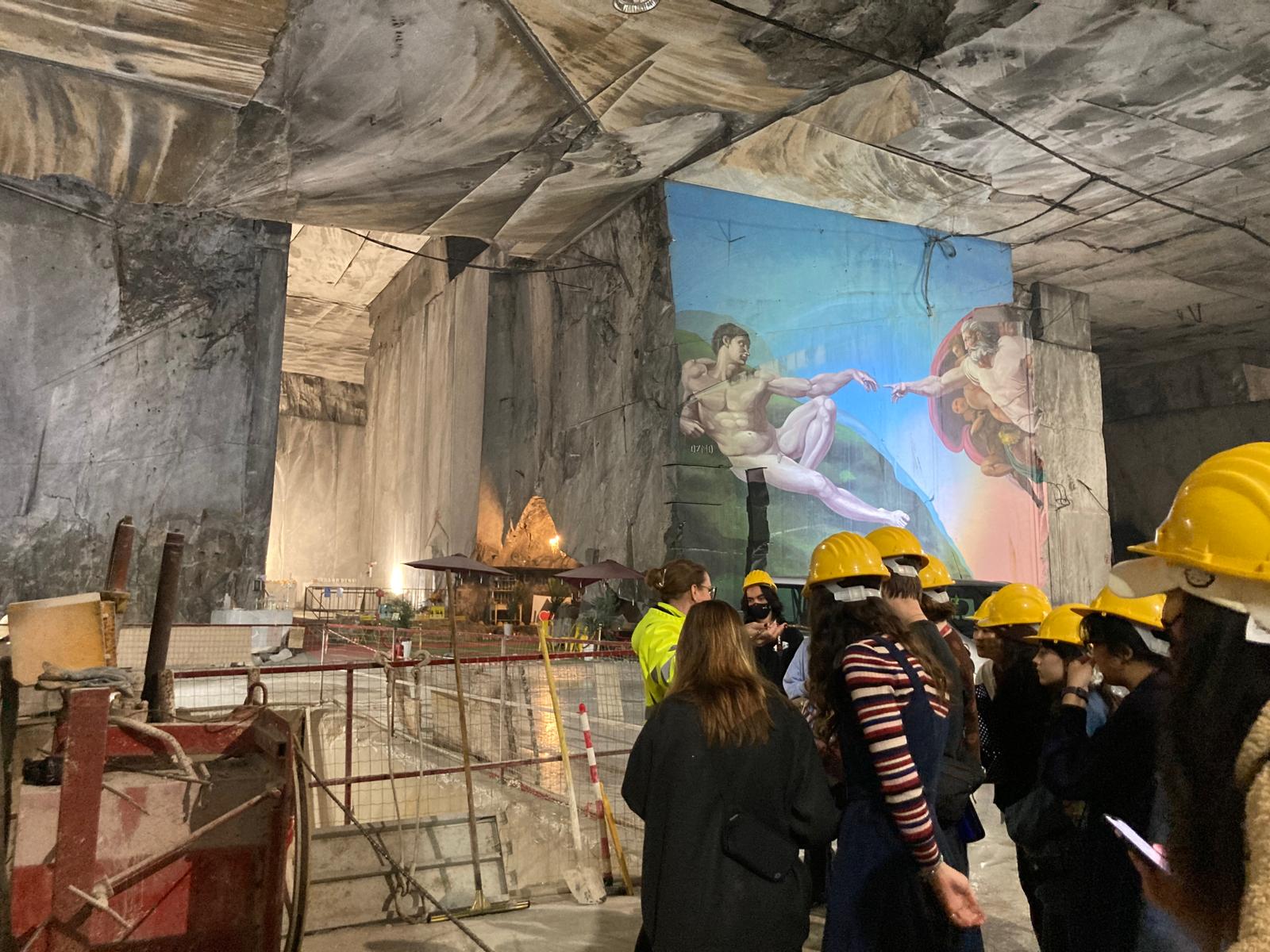
In Carrara, students examined the geological and industrial processes of marble extraction, tracing its transformation from a natural resource to a material of art and architecture.
They learned that Carrara marble, formed over 200 million years ago, has been mined since Roman times and continues to play a major role in Italy’s economy.
The program addressed environmental challenges such as quarry waste, mechanization, and local opposition movements (No Cav), emphasizing the tension between cultural legacy and ecological responsibility.
In Florence, students connected these materials to their cultural expressions—studying Michelangelo’s David at the Galleria dell’Accademia and textile innovation at Gucci Garden—thus linking extraction, design, and artistic meaning.